If you drive a full-size truck or SUV with a 6.2L V8, you’ve probably seen headlines about engine failures, a recall, and a federal investigation. They aren’t the same thing, and the difference matters. Here’s a plain-English breakdown, based on reporting from USA TODAY / Detroit Free Press and a detailed explainer from Johnson Law, P.C.
Which vehicles are involved?
The engine is the L87 6.2-liter V8. According to USA TODAY, vehicles equipped with it include the Chevrolet Silverado 1500, Tahoe, and Suburban; the GMC Sierra 1500, Yukon, and Yukon XL; and the Cadillac Escalade and Escalade ESV.
A model name and year alone don’t tell you whether your vehicle has this engine or is part of the recall. That depends on the VIN, as Johnson Law notes.
Part 1: The recall (model years 2021–2024)
On April 24, 2025, GM voluntarily recalled U.S. vehicles from model years 2021 through 2024 with the L87 engine, USA TODAY reports. That article puts the count at 597,630 U.S. vehicles (about 721,000 globally). Johnson Law lists the current population of Recall 25V-274 as 597,571 U.S. vehicles (NHTSA recall report 25V-274). Either way, it’s roughly 600,000 vehicles.
GM attributed the issue to connecting rod and crankshaft manufacturing defects tied to supplier quality concerns, USA TODAY reports. The risk is a “loss of motive power due to engine failure.”
What the recall fix involves
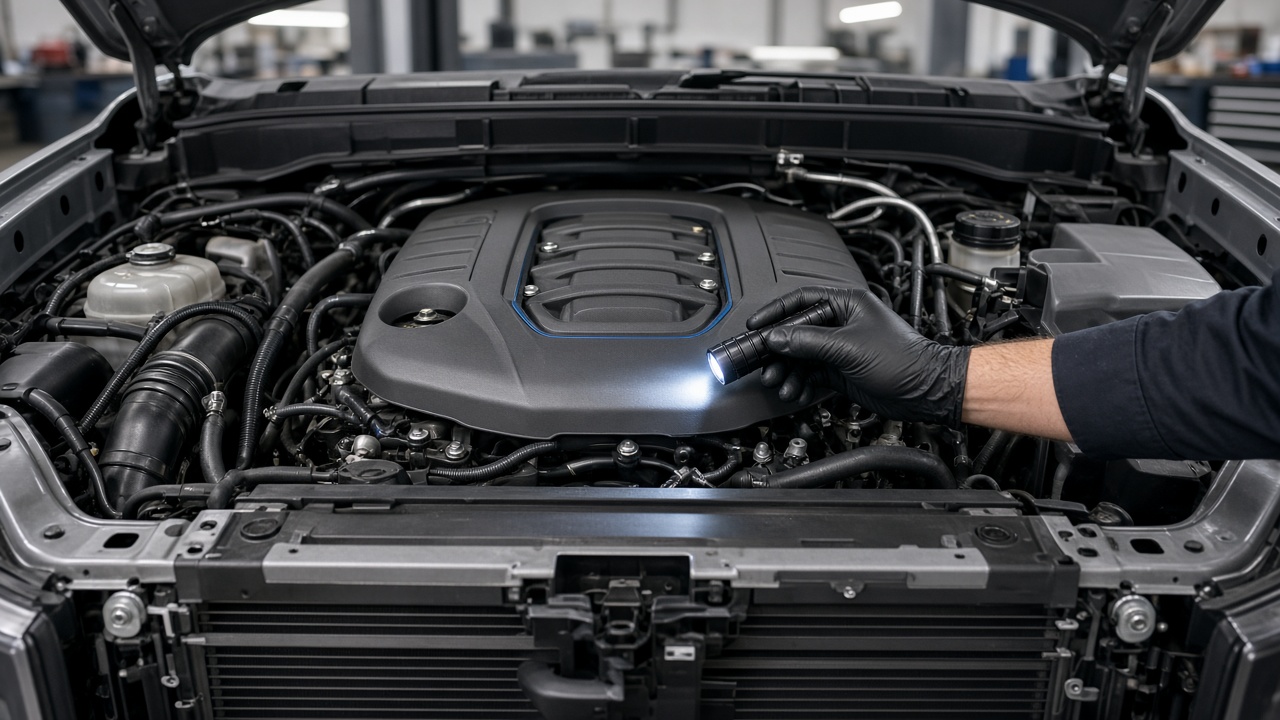
Per USA TODAY, owners take the vehicle to a franchised dealership for an engine inspection:
- If the engine passes: it gets higher-viscosity oil, plus a new oil fill cap and oil filter.
- If it fails: the dealer replaces the engine. (Johnson Law describes the current remedy as “repair or replace as necessary.”)
The special coverage
Pass or fail, GM put a special coverage program in place for the covered vehicles to protect the engines if they fail later. As stated in the USA TODAY article, that coverage “remains in effect for 10 years from the date the vehicle was originally placed in service or after reaching 150,000 miles.” Check your own paperwork or ask the dealer for the exact terms on your VIN.
Part 2: The expanded investigation (now 2021–2026)
A recall is a fix the manufacturer commits to. An investigation is NHTSA looking into whether there’s a problem that needs more action. It’s not a finding of fault.
On August 20, 2026, NHTSA’s Office of Defects Investigation opened Engineering Analysis EA26005, according to Johnson Law (see also NHTSA recalls). It looks into alleged engine failures after the recall remedy, and in engines built after the recall’s production window. It adds model years 2025 and 2026 and covers an estimated 997,743 vehicles in the U.S., USA TODAY reports. The recall itself hasn’t changed.
The complaint figures in the reporting:
- 499 complaints alleging engine failure after the recall remedy: 473 after the oil change and 26 after a full engine replacement.
- 191 more complaints involving L87 engines built after the recall’s production period.
- GM reported 6,953 complaints of post-remedy engine failure.
Some of these numbers overlap. Johnson Law warns they shouldn’t be added up or used to calculate a failure rate. The 997,743 figure is an investigation population, not a count of recalled or failed vehicles. GM told the Detroit Free Press it continues to cooperate with NHTSA’s evaluation.
Recall, special coverage, and extended warranty: not the same thing
- Recall: a specific fix for a specific safety defect, at no cost to you.
- Special coverage: extra protection for one named problem (here, the engine), for a set time or mileage.
- Vehicle service contract (often called an extended warranty): a separately purchased plan, not a warranty, that covers the repairs it lists, subject to its limits, deductibles, and exclusions.
Recall work and special coverage protect against one issue. They don’t cover your transmission, electrical system, air conditioning, or the many other parts that can fail, which a service contract may or may not cover depending on the plan.
What owners should do now
- Check your VIN for open recalls. Use NHTSA’s free lookup at nhtsa.gov/recalls. Note that it shows unrepaired recalls, not your full service history.
- Keep every service record. Johnson Law suggests holding on to recall repair orders, the dates and mileage, and which fix was done (oil change or engine replacement).
- Pay attention to warning signs. Signs mentioned in the reporting include knocking, a check-engine light, hesitation, or loss of power. If you notice any, get the vehicle looked at safely.
- Know when your factory coverage ends. Repairs outside the recall, the special coverage, and any remaining factory warranty are generally your cost unless another plan covers them.
Frequently asked questions
Is my vehicle part of the investigation, so it’s recalled?
No. Being in the investigation population doesn’t mean a vehicle is recalled or defective. Check your VIN.
My recall work is done. Am I covered for everything?
No. The special coverage protects the engine for the stated terms. Other parts aren’t included.
Will the investigation lead to a new recall?
Nobody knows yet. It could lead to more action or close without one.
Does warranties.autos handle recalls?
No. Recalls are handled by franchised dealers at no charge. We’re an independent referral service that helps drivers get service contract quotes from participating dealers.
Plan for what the recall doesn’t cover
Service contracts generally don’t pay for recall repairs, problems covered by a manufacturer program, or conditions that exist before you buy. A plan is for future failures the contract lists. Check the exclusions before you buy.
warranties.autos helps drivers get quotes on vehicle service contracts (often called extended warranties) from participating franchised dealers, including manufacturer-issued plans where eligible. Your VIN is the starting point, because it decides which plans fit your vehicle.
Want to compare coverage levels first? See our Basic, Enhanced, and Comprehensive plans.
Disclaimer: This article is general information only and is not legal advice. warranties.autos is an independent referral service and is not affiliated with NHTSA or any vehicle manufacturer. Brand and model names are used for identification only. Facts and figures come from the linked sources as of their publication dates. Check your VIN with NHTSA and your dealer for the current status of your vehicle. Vehicle service contracts are not warranties; coverage and availability vary by vehicle, plan, and state.
Leave a Reply